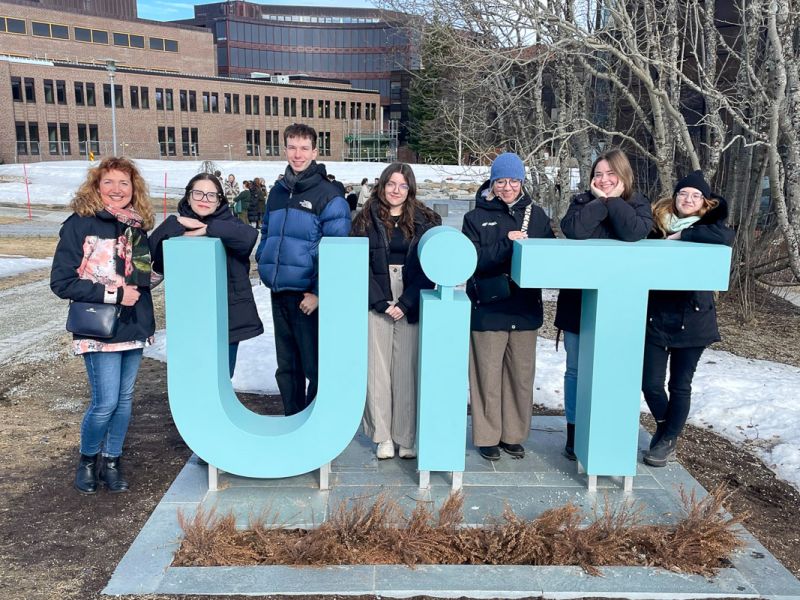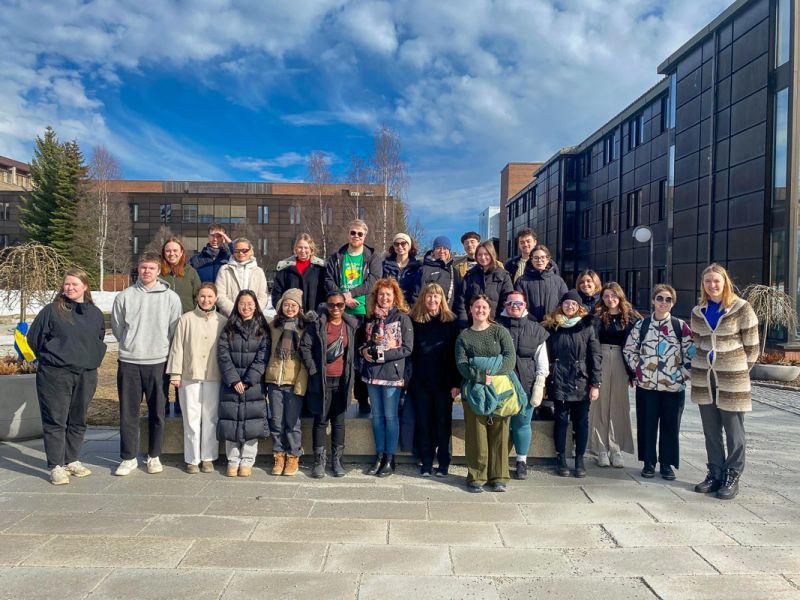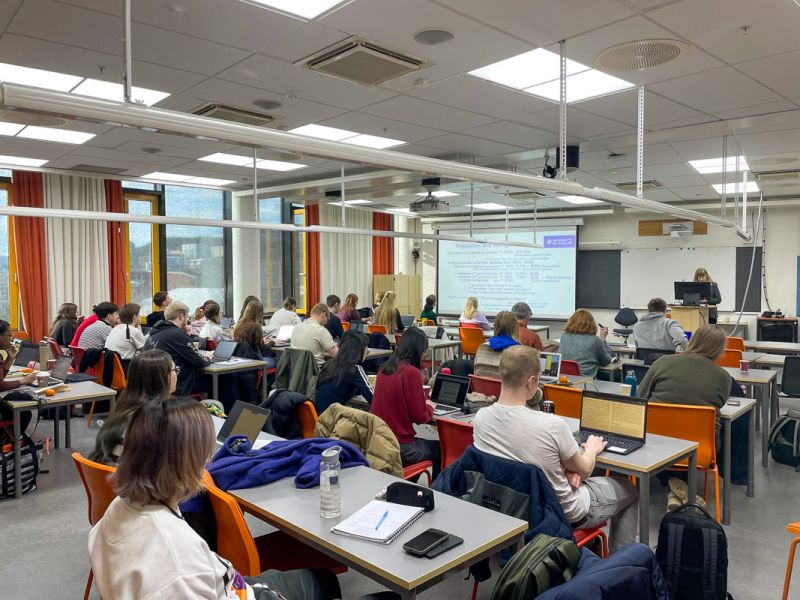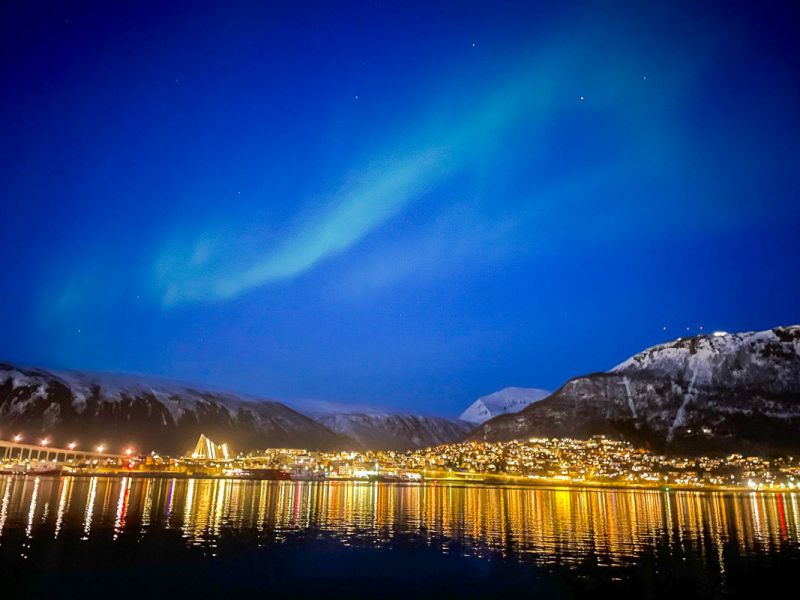
A group from the Faculty of English led by Prof. Magdalena Wrembel and Prof. Anna Balas, participated in the Erasmus + Blended Intensive Programme (BIP) "Multilingualism and Language Contact" at the Arctic University of Norway in Tromsø, Norway from the 7th to the 15th of April 2026. The student participants from 1 and 2 MA included Magdalena Rynkowska, Maja Maćkowiak, Adam Janyska, Barbara Cieślak, and Karina Nikitchenko.
The course was designed by lecturers and attended by students from the following institutions:
- UiT The Arctic University of Norway, Norway (UiT, coordinating institution, host institution of the on-site teaching and learning phase)
- Adam Mickiewicz University, Poznań, Poland, (UAM, sending institution)
- University of Iceland, Iceland (HÍ, sending institution)
- University of Konstanz, Germany (UKN, sending institution)
This BIP course offered an in-depth introduction to the theories and models of first, second, third, and multilingual language acquisition. We explored topics related to language contact, such as progressive and reverse cross-linguistic influence, the effects of exposure and age, language attrition, metalinguistic awareness, and phenomena related to language distance. For instance, we considered whether multilinguals who speak closely related varieties (e.g., dialects) differ from those who speak more distantly related varieties (e.g., languages from different language families). Additionally, the course examined multilingual contexts involving both globally dominant and globally less widespread languages, with a particular focus on how L2 English influences the vocabulary and grammar of domestically dominant but globally smaller L1s (e.g., Icelandic). We analyzed a range of multilingual scenarios, including heritage language acquisition, second and third language acquisition, and language combinations involving English, Icelandic, German, Polish, and Norwegian. The course also delved into neurolinguistics, exploring the cognitive and neurological effects of multilingualism on the brain.
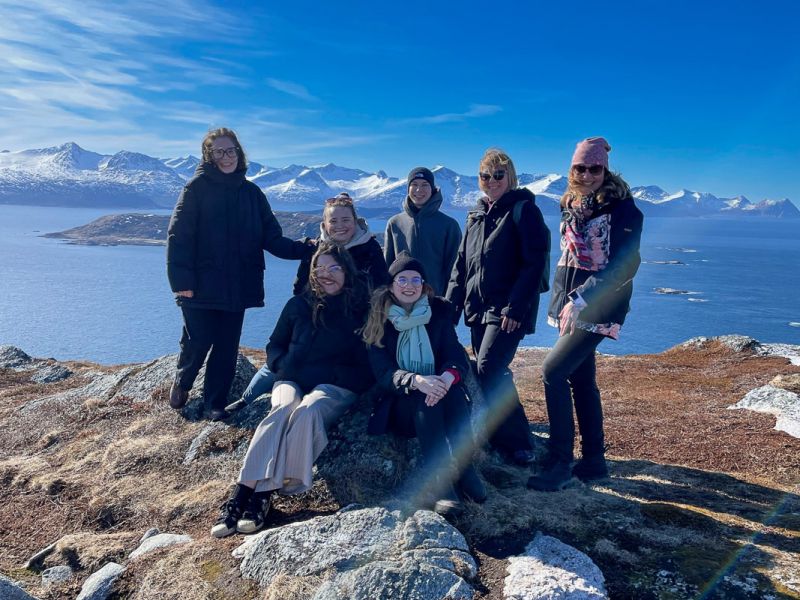
Apart from the intense academic course, the BIP involved also a social and cultural programme; a sight-seeing tour of historical Tromsø and a mountain hike on the Sommarøy island.