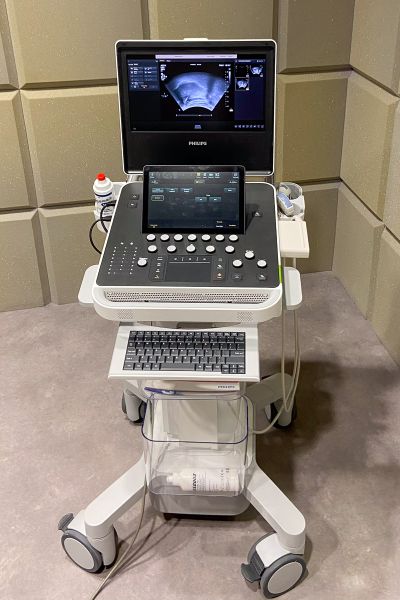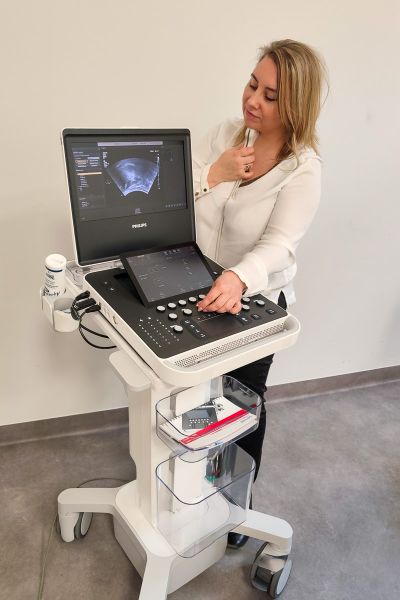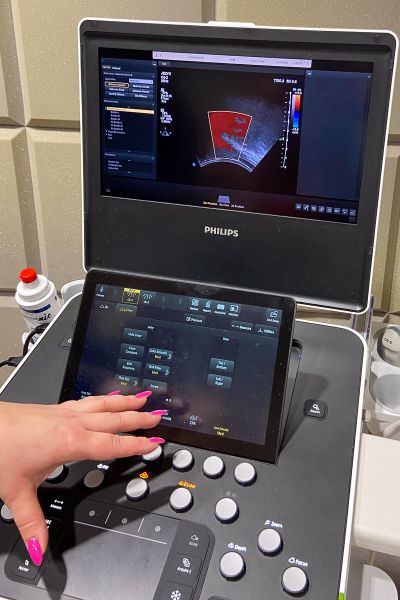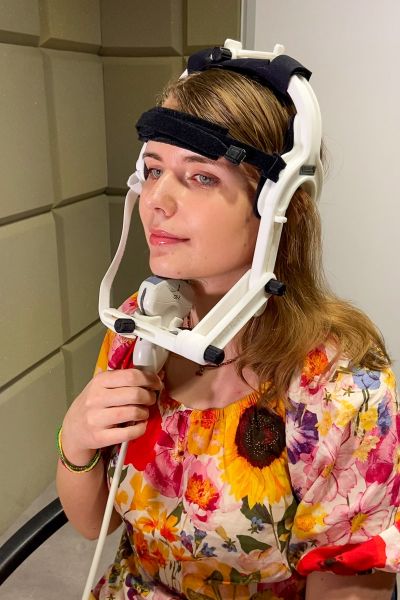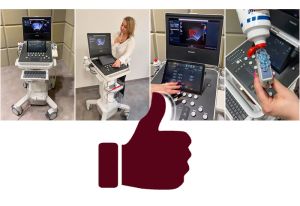
The Faculty of English has acquired a portable ultrasound machine that allows linguists to visualise and measure the movement and shape of the tongue during speech.
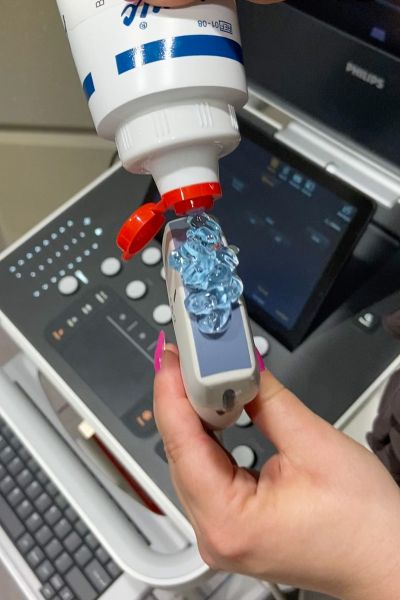
Ultrasound tongue imaging is a state-of-the-art, non-invasive method adapted from medical practice that provides real-time insights into the kinematics of speech articulation. In this method, a probe placed under the speaker’s chin emits ultrasound waves that travel through soft tissue and bounce back as returning echoes. These echoes are then used to generate an image of the oral cavity, allowing us to trace the position and contour of the tongue during articulation.
The method has vast research potential in experimental phonetics and phonology. It enables the investigation of linguistic phenomena such as coarticulation, assimilation, and speech timing. Ultrasound imaging findings are relevant not only to researchers investigating cross-linguistic comparisons and first and second language acquisition, but also have broad applications in speech therapy and clinical practice. The machine can also be used in foreign language teaching, allowing students to observe differences in the articulation of vowels and consonants in their native and foreign languages, paving the way for greater phonetic awareness and ultimately more accurate pronunciation of non-native sounds.